Hand Drawn Botanical 13: Integrating Hand-Drawn Aesthetics into Professional Design Workflows
In the realm of graphic design and digital content creation, there is a persistent demand for assets that feel authentic, organic, and human-made. While vector graphics offer precision, they can sometimes lack the warmth associated with traditional artistry. This is where Hand Drawn Botanical 13 enters the workflow as a strategic asset. It is not merely a collection of images; it is a modular toolkit designed to bridge the gap between rigid digital layouts and natural, hand-crafted aesthetics.
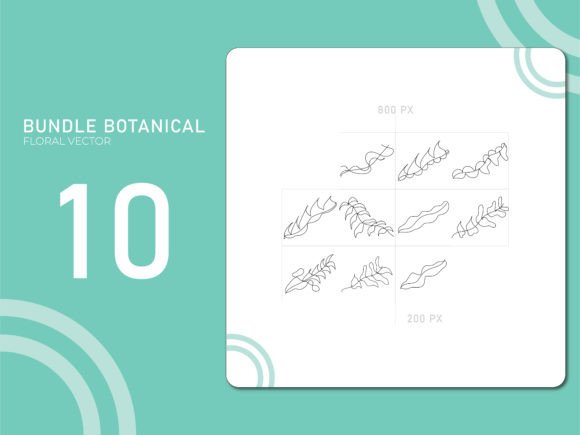
This specific bundle includes a total of 10 high-quality EPS and JPG files. The distinction between these formats is critical for how you will integrate them into your projects. Understanding the technical capabilities of EPS versus JPG files allows designers, entrepreneurs, and hobbyists to maximize the utility of this resource before, during, and after the creative process begins.
Understanding the Asset Structure: EPS vs. JPG
The inclusion of both EPS (Encapsulated PostScript) and JPG (Joint Photographic Experts Group) files in the Hand Drawn Botanical 13 bundle serves two distinct purposes within a design pipeline. Recognizing when to use which file type is the first step in efficient implementation.
- EPS Files: These are vector-based files. They are resolution-independent, meaning you can scale them up or down infinitely without losing quality. This makes them ideal for large-format printing, such as banners, t-shirts, or product packaging, where clarity at various sizes is paramount. Furthermore, because they are vectors, individual elements can often be isolated, recolored, or modified using image editing software.
- JPG Files: These are raster images. They are ready-to-use for immediate placement in documents, social media posts, or web graphics. However, they are pixel-based. If you attempt to enlarge a JPG significantly, it may become blurry or pixelated. They are best suited for fixed-size applications like business cards, stationery, or screen-based invitations.
By having access to both formats, users of Hand Drawn Botanical 13 gain flexibility. You can start with the JPG for quick mockups and finalize the project with the EPS for production-ready output.
Pre-Production: Planning and Composition Strategy
Before opening any design software, effective planning ensures that the botanical elements enhance rather than clutter the final composition. The product description notes that while premade borders are included, the true value lies in the ability to download the EPS files and arrange them however you like to create your own composition.
This modularity requires a deliberate approach to layout. When working with botanical themes, balance and negative space are crucial. Unlike geometric patterns that repeat mechanically, hand-drawn elements have organic variations. To maintain visual harmony:
- Analyze the Elements: Open the EPS files in a vector editor. Identify the heaviest visual weights—typically the largest leaves or most detailed flowers—and plan where they will anchor the design.
- Determine the Focal Point: Decide if the botanicals are supporting text or acting as the primary subject. For business cards or invitations, the text usually remains the focal point, requiring the plants to frame rather than compete with typography.
- Create a Mood Board: Before arranging the actual assets, sketch out potential compositions. Consider whether you want a symmetrical border, an asymmetrical corner accent, or a scattered pattern across a background.
This preparatory phase reduces trial-and-error time later. By understanding the structural integrity of the Hand Drawn Botanical 13 assets, you can anticipate how they will interact with other design elements.
Implementation: Technical Execution in Software
Once the plan is set, the execution phase involves using appropriate tools. The recommendation to use image editing software such as Adobe Photoshop or Gimp is sound, though it is worth noting that for EPS files, vector-specific software like Adobe Illustrator or Inkscape offers superior control over path manipulation.
Working with Vector Assets
If you choose to manipulate the EPS files, ensure your software supports vector import correctly. In Adobe Illustrator, you can ungroup the layers to isolate specific stems or leaves. This allows for precise customization:
- Color Adaptation: Change the hue of the leaves to match brand colors. A green leaf can be shifted to a teal or mustard tone to fit a modern palette without altering the line art’s integrity.
- Scale and Rotate: Use the bounding box to rotate elements for dynamic angles. Mirroring certain botanical pieces can create symmetry without duplicating work.
- Opacity and Blending: Adjusting the opacity of overlapping elements can create depth, mimicking the look of watercolor washes or layered paper cutouts.
Working with Raster Assets
For JPG files, the workflow is more straightforward but less flexible. These are best used in Photoshop or even simpler tools like Canva or Microsoft PowerPoint for quick turnarounds. Since they cannot be scaled beyond their original resolution, always place them at their intended final size or smaller. If you need to resize, do so before exporting to avoid quality loss.
Use Cases Across Industries
The versatility of Hand Drawn Botanical 13 allows it to fit into diverse professional workflows. Here is how different roles might integrate these assets into their daily operations.
Small Business Owners and Entrepreneurs
For small businesses, branding consistency is key. A coffee shop owner might use the botanical borders on custom takeaway cups, creating a cohesive experience from packaging to marketing materials. The EPS files allow for scaling the logo or decorative elements to fit curved surfaces on mugs or wide formats on tote bags. The hand-drawn aesthetic conveys artisanal quality, appealing to customers who value craftsmanship.
Educators and Bloggers
Content creators often struggle to make digital information visually engaging. Educators designing worksheets, lesson plans, or certificates can use the premade borders from the bundle to add a touch of elegance without spending hours drawing from scratch. Bloggers can use the JPG versions as featured images or section dividers, breaking up text blocks with organic shapes that draw the eye down the page.
Print-on-Demand Creators
Artists selling on platforms like Redbubble or Etsy benefit from the high-quality vector nature of the EPS files. They can incorporate these botanicals into larger illustrations, ensuring that their products look sharp whether viewed on a smartphone screen or printed on a large poster. The ability to modify the color and arrangement means each product can be unique, reducing the risk of copyright issues associated with stock imagery.
Event Planners and Stationery Designers
Invitations require a high level of detail and sophistication. The delicate lines of hand-drawn botanicals pair exceptionally well with serif fonts and minimalist layouts. By arranging the elements around the invitation text, designers can create a framed effect that guides the guest’s attention to the essential details—the date, time, and location.
Quality Control and Long-Term Organization
Integrating third-party assets into a long-term workflow requires good file management practices. After purchasing Hand Drawn Botanical 13, organize the downloaded files immediately. Create a dedicated folder structure, perhaps separating the EPS and JPG files, and further categorizing them by element type (e.g., "Leaves," "Flowers," "Borders").
Consistency in naming conventions helps when revisiting projects months or years later. Additionally, keep a record of the source and license terms. Even if the asset is purchased for personal or commercial use, maintaining documentation protects against future licensing disputes.
When preparing files for print, always check the color mode. Convert RGB images to CMYK if sending to a professional printer, as screens display light (RGB) while printers use ink (CMYK). Colors that appear vibrant on screen may look duller in print. Using the EPS files, which often retain vector color data, can help mitigate some of these discrepancies, but a proof print is always recommended for critical projects.
Maximizing Efficiency Through Repurposing
The phrase "the options are endless" in the product description is literal. One of the most efficient ways to use Hand Drawn Botanical 13 is through repurposing. A single composition created for a wedding invitation can be deconstructed and rearranged for a birthday card, then again for a thank-you note.
By treating the assets as modular components rather than static images, you extend the lifespan of the purchase. Save your custom compositions as template files. This allows for rapid iteration in future projects. For example, a freelancer might save a standard "Botanical Header" layer in Photoshop that can be dropped into new client proposals, ensuring a consistent visual identity across multiple pitches.
Conclusion
Hand Drawn Botanical 13 is more than a clip art bundle; it is a functional tool for enhancing visual communication. Its strength lies in the dual format availability and the freedom to compose custom arrangements. Whether you are a seasoned graphic designer building a complex brand identity or a hobbyist creating personalized gifts, integrating these assets requires thoughtful planning and technical awareness. By leveraging the scalability of EPS files and the immediacy of JPGs, and by organizing your workflow efficiently, you can produce professional-grade designs that stand out in a crowded digital landscape.